Every vehicle wrap succeeds or fails before the first panel goes on. The film, the print, the design — none of it matters if the adhesive never bonds to the surface underneath. After 30,000 projects and 28 years in the field, we can tell you the same thing every time a wrap bubbles, lifts, or peels early: the problem started at prep.
Here is what is actually on a vehicle when it rolls into our bay, and how we handle each level of it.
What’s on the Surface
Commercial vehicles live outside and work hard. By the time a fleet truck reaches us, the paint is usually carrying some mix of:
- Dirt and dust
- Road grime — the oils and greases thrown up off the road
- Pine sap
- Bug remains and other organic debris
- Paint overspray
- Hard contaminants like dried cement, splattered paint, and industrial residue
Film will not stick to oil, grease, or wax. Adhesive needs clean, dry, bare paint to form a functional bond. Skip the prep and the material gets contaminated, the bond fails, and the vinyl is often ruined before it ever earns an impression.
Three Categories of Surface Issues
We sort every contaminant into one of three buckets. The bucket determines the method.
1. Routine Contamination — Wash and Wipe
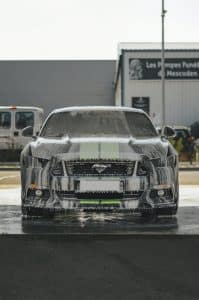
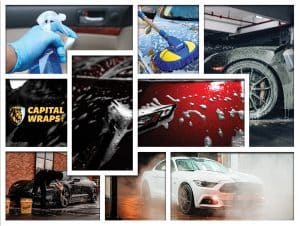
Dirt and road grime come off with a proper wash followed by a solvent wipe. We use a high-quality general degreaser to strip dirt and oily residue, then finish with a 70% isopropyl alcohol and 30% water solution to pull the rest. Washing is not optional — film will not adhere over grease or oil. For most commercial fleet wraps, this level of prep is exactly what the job needs.
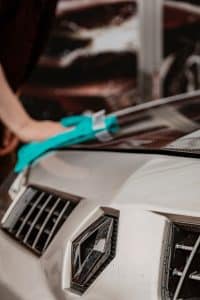
2. Complex Removal — Chemical and Mechanical
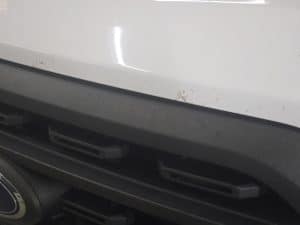
Some contaminants need more than soap. Pine sap, bug remains, and overspray often require a dedicated solvent to break them down, followed by claying the panel. We use a clay bar to mechanically pull bonded particulate — overspray, rail dust, embedded grit — out of the paint so the surface reads perfectly smooth under the film. This step matters most on full wraps and color-critical work, where the client expects a flawless finish. Any contamination left behind will telegraph straight through the vinyl.
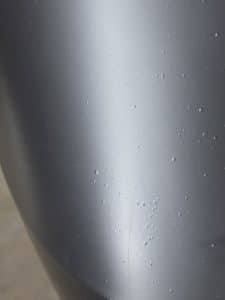
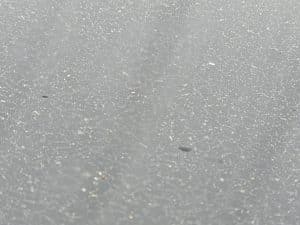
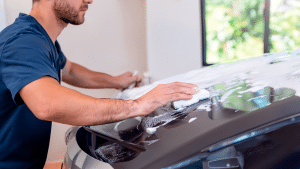
3. Permanent Contaminants — Clean and Wrap Over
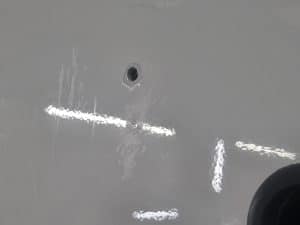
Then there is damage that cannot be removed without risking the paint itself. We have worked with painters carrying overspray baked into their finish and contractors who drove through wet cement and let it cure on the body. Latex paint can sometimes be chased off with hardware-store chemicals; cement may come off with chemical or mechanical effort, but that is specialized restoration work we are not equipped to perform on a customer’s vehicle. In those cases we wash, clean to the highest standard possible, and install over the contaminant — with the client informed up front.
Why the Environment Matters Too
Prep is not only about the panel. We work in a controlled space, away from vents and entrances, and we install within the recommended temperature window of 50–100.4°F (10–38°C). Wax and polish residue must be fully removed. Solvent still trapped in fresh paint can wreck adhesion and cause shrinkage or blistering down the road. These are the details that separate a wrap that holds for years from one that lifts in months.
The Standard Doesn’t Change
Whether we are prepping one service truck or staging a 200-vehicle fleet rollout, the surface gets the same treatment. As 3M Preferred and PDAA Master Certified installers, we do not cut prep to hit a deadline — we build the deadline around doing it right.
A wrap is your most visible marketing asset. Prepped correctly, it works for years.