
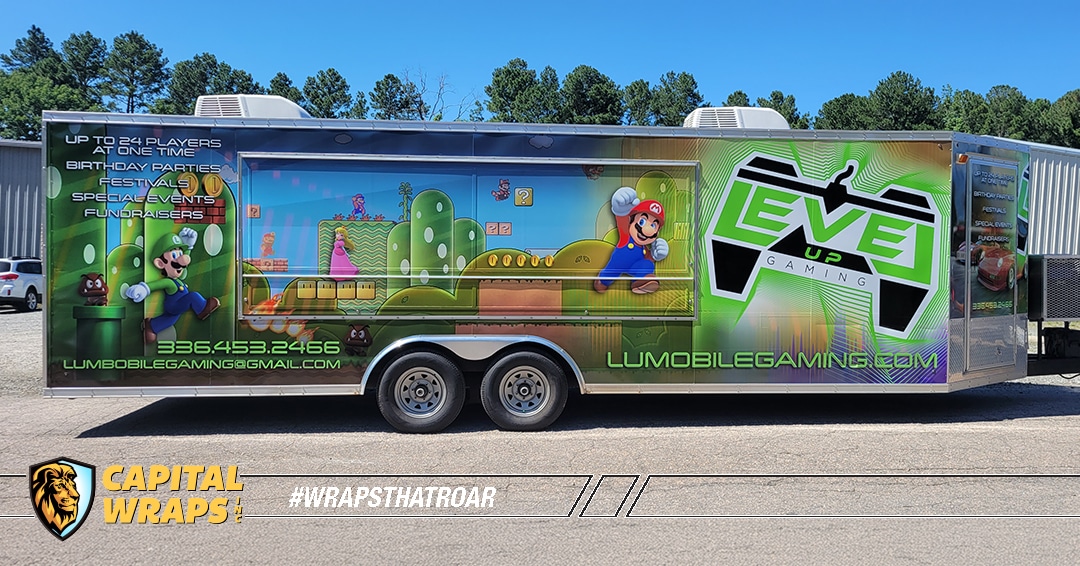
A fleet manager at an HVAC company once told us something we’ve heard a hundred times: “The other shop was $800 cheaper. So we went with them. Eight months later, the vinyl was lifting off every door handle on the fleet. We ended up paying twice.” best vinyl for vehicle wraps
The difference between a commercial vehicle wrap that lasts 5–7 years and one that fails before the first winter is almost always the material — not the design, not the installer, not the color. It’s the vinyl.
After 28 years and more than 30,000 completed commercial wrap projects, we can tell you this with certainty: most wrap problems trace back to material science, not installation. Understanding the difference between vinyl types doesn’t require a chemistry degree. But it does require someone who will tell you the truth before you sign off on a job.
Here’s the truth.
Cast vs. Calendared Vinyl: The Difference That Defines Everything
Walk into any commercial wrap shop in the country and you’ll hear the words “cast” and “calendared” thrown around. Most buyers don’t know what they mean. That gap in knowledge is where corners get cut and budgets get wasted.
Calendared Vinyl: The Wrong Material for Commercial Vehicles
Calendared vinyl is manufactured by squeezing a thick mass of PVC compound through a series of rollers — “calendars” — to flatten it into sheets. It’s fast to produce, inexpensive, and carries one fatal characteristic for vehicle wrap applications: memory.
Because the material has been mechanically compressed rather than chemically formed, it has a persistent drive to return to its original shape. Apply it over a door handle, a mirror housing, a curved bumper — and over time, it pulls away. The industry term is “tenting.” On a commercial fleet, it’s called a warranty nightmare.
Calendared vinyl has legitimate applications. Flat-surface graphics on box trucks, simple door lettering, temporary signage — these are valid use cases for calendared film. But a full wrap on a service vehicle with curves, rivets, door handles, and real-world exposure to temperature swings? Calendared vinyl will fail. It’s not a matter of if. It’s a matter of when.
Cast Vinyl: The Only Standard for Fleet Wraps
Cast vinyl is manufactured differently at a molecular level. The raw PVC is mixed into a liquid formulation and cast — literally poured — onto a flat release liner, then cured. The result is a film that is thinner, more conformable, and critically, has no memory. It doesn’t want to return anywhere. Heat it, stretch it, press it around a complex body line — it stays.
Cast vinyl is the only material we use on commercial vehicle wraps at Capital Wraps. When you’re wrapping a company’s fleet — vehicles that are on the road every day representing that brand — anything less is a liability.
The brands that meet the cast standard for commercial applications include 3M (our primary material for fleet projects), Avery Dennison, ORAJET 3951, and Mactac. We are a 3M Preferred Installer, which means we work with their technical team directly and back our installs with the full 3M Performance Warranty. That warranty doesn’t exist for calendared material — because 3M knows calendared vinyl doesn’t hold up.
Thickness, DPI, and the Details That Separate Good Work from Great Work
Material choice is the foundation. But two other technical factors determine whether a commercial fleet wrap holds up to real-world conditions and maintains brand consistency across vehicles.
Film Thickness: Why 3–4 Mils Matters
Premium cast vinyl for commercial vehicle wraps runs between 3 and 4 mils thick — roughly the thickness of a few sheets of copy paper. That’s thin enough to conform to complex contours without bridging or lifting, but dense enough to handle road exposure, UV, and the daily abuse a service vehicle takes.
Thicker is not always better. Films that are too heavy resist conforming to tight curves and create installation stress points that eventually fail. The science is in the formulation, not the caliper.
Print Resolution: What 1200×1200 DPI Actually Means in the Field
For fleet wraps that incorporate custom graphics, logos, and brand color systems, print quality determines whether your vehicles look like a professional operation or a glorified yard sign.
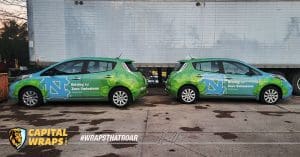
Our production facility runs at up to 1200×1200 DPI on grand format equipment. That resolution matters most in two places: fine text legibility (phone numbers, licensing numbers, URLs) and color accuracy across a fleet. When vehicle #1 comes out of installation and vehicle #47 rolls in six months later, the cyan on your logo has to match. That level of color consistency across a fleet requires calibrated printing at high resolution, not a shop running a desktop-grade wide-format printer.
The Finish Spectrum: What Each Option Signals for Commercial Brands
The most visible choice in any vehicle wrap project is finish. For commercial fleet clients, finish isn’t just aesthetic — it’s a brand signal.
Gloss
High-gloss wraps deliver the most saturated, vivid color. For brands that rely on vibrant hues — food and beverage companies, retail brands, franchise systems with bold color standards — gloss is typically the correct choice. It shows dirt more readily than other finishes, which means a fleet maintenance policy that keeps vehicles clean.
Matte
Matte finishes read as premium and modern. Several national HVAC, pest control, and real estate brands have moved toward matte navy, matte white, or matte black fleet programs in recent years. The texture diffuses light, which means the wrap reads as more textured and tactile than a glossy alternative. Matte wraps require specific maintenance protocols — no conventional wax, no abrasive cleaners, and careful washing. For fleet managers, this means training drivers on what goes through an automatic car wash and what doesn’t.
Satin
Satin sits between gloss and matte, combining deeper color saturation than true matte with a softer, less reflective surface than gloss. Many commercial clients who want a “step up” from stock finishes without full matte maintenance requirements choose satin. It’s particularly effective with white fleet vehicles — satin white has a depth that flat paint simply doesn’t.
Specialty Finishes
Textured films, brushed metal effects, and specialty laminate overcoats have commercial applications in specific contexts — branded event vehicles, trade show graphics, experiential marketing activations. These are not standard fleet material, but they’re part of the Capital Wraps capability set for clients who need them.
Material Longevity: Setting Realistic Expectations for Fleet Managers
No wrap lasts forever. The honest conversation about material lifespan is one of the first things we have with fleet managers, because it directly affects total cost of ownership calculations.
Vertical surfaces — doors, side panels, the rear of the vehicle — are the areas that last longest. On premium 3M cast vinyl, expect 5–7 years of performance under normal conditions in the Southeast and Mid-Atlantic region.
Horizontal surfaces — hoods, roofs, the top of box truck cargo areas — take direct UV exposure and typically see a 3–5 year performance window before the material begins to show age.
The cost of waiting too long to replace a wrap is real. Vinyl that has been on a vehicle beyond its service life hardens and bonds more aggressively to the substrate. Removal becomes a labor-intensive process that costs significantly more than timely replacement. Fleet managers who treat wraps like oil changes — scheduled, proactive, on a lifecycle plan — spend less money than those who run to failure.
What to Ask Before You Approve Any Fleet Wrap Project
Before a wrap job starts, every fleet manager or marketing director should get clear answers to these questions:
- Is the specified material cast or calendared? Any shop proposing calendared vinyl for full vehicle wraps is cutting corners that will cost you later.
- What is the specific material being used, and does it come with a manufacturer’s warranty? 3M Performance Warranty is the benchmark. Ask for it in writing.
- What is the rated lifespan of the material in this application? A reputable shop will give you a realistic number, not a best-case scenario.
- What is your color matching process for fleet consistency? For multi-vehicle programs, how does the shop ensure vehicle #1 and vehicle #50 match?
- What does removal look like at end of life, and who handles it? The back half of a wrap lifecycle matters as much as the front.
These aren’t trick questions. They’re the questions a shop with 28 years of commercial wrap experience answers without hesitation — because we’ve been asked them thousands of times.
Frequently Asked Questions
What’s the difference between cast and calendared vinyl for commercial fleet wraps?
Cast vinyl is formulated as a liquid and cured into a thin, flexible film with no material memory. It conforms to complex vehicle surfaces and lasts 5–7 years in commercial applications. Calendared vinyl is mechanically compressed, has a drive to return to its original shape, and will lift from curved surfaces over time. For any full commercial vehicle wrap, cast vinyl is the only appropriate specification.
Does the vinyl brand matter, or is all cast vinyl the same?
Brand and formulation matter. 3M, Avery Dennison, ORAJET/ORAGUARD, and Mactac are the benchmark manufacturers for commercial cast vinyl. Each has specific product lines rated for different surface types and exposure conditions. Using a 3M Preferred Installer means your project is executed with 3M-specified materials and backed by 3M’s manufacturer warranty.
How long does commercial vehicle wrap vinyl actually last?
On vertical surfaces (doors, panels), premium cast vinyl typically delivers 5–7 years under normal Southeast and Mid-Atlantic conditions. Horizontal surfaces (hoods, roofs) see 3–5 years of performance due to direct UV exposure. Lifespan is affected by parking conditions, vehicle washing frequency, and whether the fleet operates primarily in coastal, high-UV, or extreme-temperature environments.
Can vinyl be removed without damaging the vehicle’s paint?
Yes — when removed within its service life, high-quality cast vinyl peels off cleanly, leaving the original paint in the same condition it was in at installation. This is one of the primary operational advantages of vinyl over paint for fleet vehicles. The critical word is “within its service life.” Vinyl left on beyond its rated lifespan becomes significantly harder to remove and may require professional labor to address adhesive residue.
The material science underneath a vehicle wrap isn’t visible to anyone on the road. But it determines everything that happens to that wrap over the next five years — whether it holds tight on the highway at 75 mph, whether the color holds across a hundred vehicles, whether removal at end of life is clean or costly. Choosing premium cast vinyl, from a certified installer with the manufacturer backing to prove it, is the foundation every commercial fleet wrap program is built on.
Capital Wraps is a 3M Preferred Installer, PDAA Master Certified, and Oracal and Mactac Certified. Headquartered in Raleigh, NC, with national fleet execution capability. Call 877.775.9727 or visit capitalwraps.com.
Wraps that Roar.