Superior vehicle wrap performance is 100% dependent on the precision of surface preparation; even the most advanced 3M or Avery Dennison cast vinyl will fail if applied to a contaminated substrate. At Capital Wraps, we leverage 28 years of field experience and over 30,000 completed projects to execute a multi-stage decontamination process that ensures your fleet graphics “roar” for their entire service life.
How do different surface contaminants affect my vehicle wrap?
Vehicle surface issues generally fall into three distinct categories based on the level of intervention required for removal:
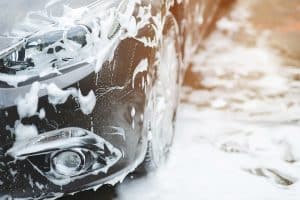
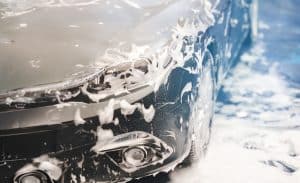
- Easily Removed Contaminants: This includes standard road grime, dirt, and oils. These are addressed with high-quality degreasing soaps followed by a mandatory 70% isopropyl alcohol (IPA) and 30% water wipe-down to ensure the adhesive makes 100% contact with the paint.
- Complicated Removal (Chemical/Mechanical): Stubborn elements like pine sap, paint overspray, and bug remains require specialized chemicals to break down the bond. We often utilize a mechanical clay bar treatment to release microscopic particulates trapped in the paint’s pores, ensuring a “paint-like” smooth finish.
- Permanent Defects: Issues like dried cement, splattered latex paint, or deep rust cannot be removed without risking damage to the underlying vehicle. In these cases, we clean the surface as thoroughly as possible, but the texture of the defect will remain visible beneath the vinyl.
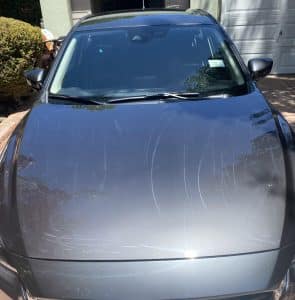
Proper surface preparation
What are the ideal environmental conditions for a professional wrap installation?
Preparation is as much about the room as it is the vehicle. We manage every environmental variable in our 10,000 sq. ft. facility to prevent “pimple” defects caused by airborne dust:
- Temperature Control: For optimal adhesion, the air and substrate must be between 21°C and 27°C (70°F–80°F). If the surface is too cold, the bond won’t set; if it’s too hot, the film becomes over-aggressive and difficult to position.
- Dust Suppression: We vacuum the shop floor and often wet the floor with soapy water to trap dust particles, preventing them from becoming airborne during the wrap process.
- Static Management: Vehicles are grounded to dissipate static electricity, which naturally attracts contaminants to the paint.
How does Capital Wraps ensure long-term durability in “critical areas”?
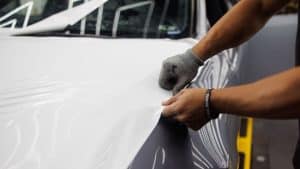
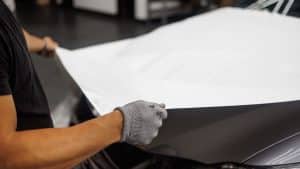
Most wrap failures occur at the edges, seams, and deep recesses. Our PDAA Master Certified and 3M Preferred installers follow a rigorous post-prep protocol:
- Deep Recess Cleaning: We use specialized tools to reach into door jambs, molding gaps, and seals where hidden grease often resides.
- Post-Heating: For compound curves and corrugations, we use heat guns to reach 90°C to 95°C (194°F–203°F). This “sets” the vinyl’s memory, ensuring it stays conformed to the vehicle’s shape without shrinking or lifting.
- Sensor Validation: After installation, we test all safety sensors to ensure the graphics do not interfere with vehicle operations.


Why should I trust Capital Wraps with my national fleet?
We aren’t just installers; we are industry-leading experts who beta test for major manufacturers. Our operation is backed by over $2,000,000 in on-site production equipment, allowing us to manage color accuracy and print quality (up to 1200x1200DPI) across a 500-vehicle fleet as easily as a single truck. Our team of seven senior installers brings a combined experience range of 5 to 25 years to every project, ensuring that your brand integrity is upheld nationwide.
Summary: The Capital Wraps Prep Standard
To achieve a professional-grade wrap, a vehicle must undergo a three-stage cleaning surface preparation process (Degrease, Solvent Wipe, Clay Bar) within a temperature-controlled environment (21-27°C). By addressing contaminants early and utilizing 90-95°C post-heating on critical edges, Capital Wraps delivers high-impact marketing assets that last. Every minute you wait is an impression missed—Wraps that Roar.
Note: For the best results, we recommend a dedicated “cleaning day” prior to installation to allow the substrate to fully dry and reach ambient temperature.